








Introduction
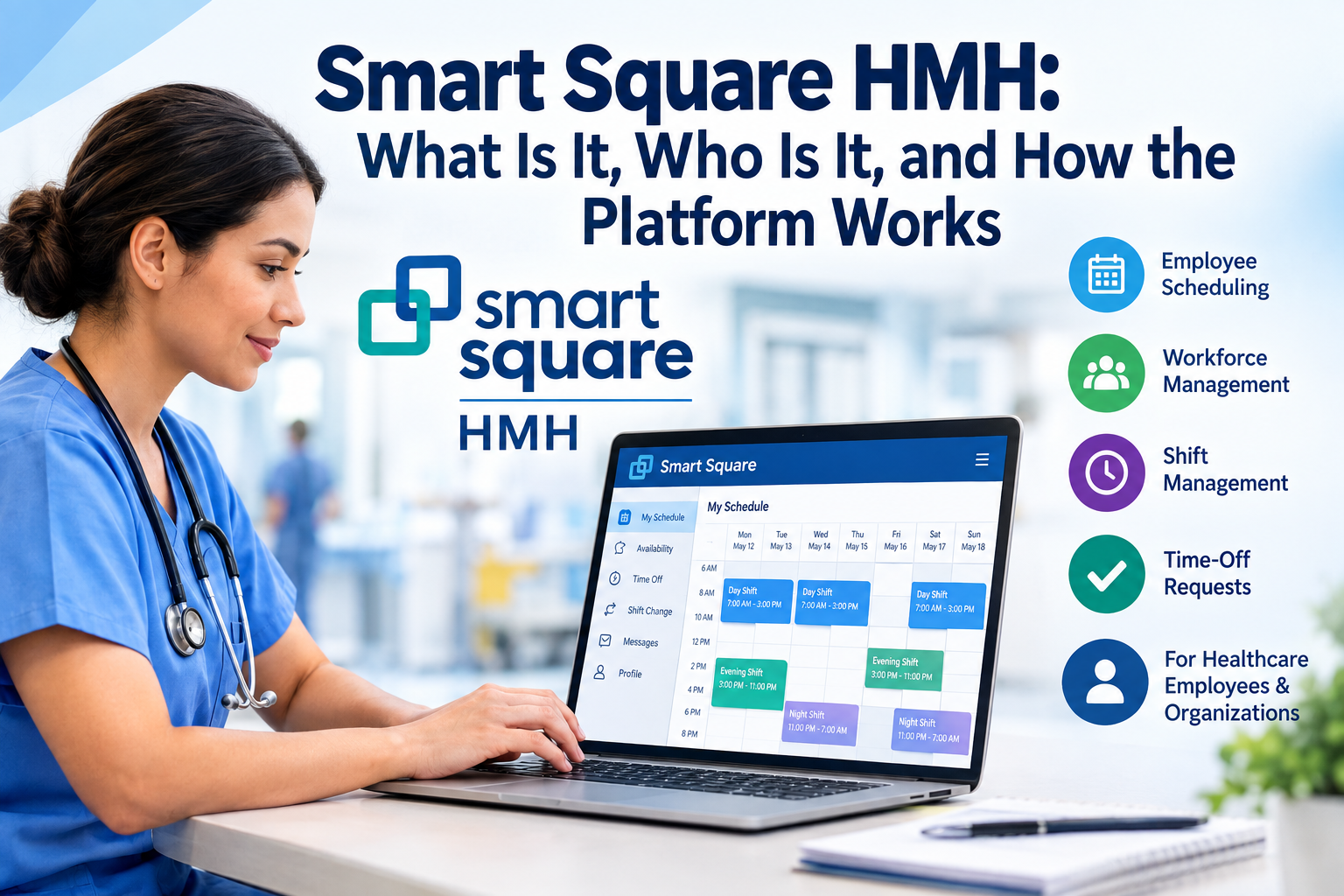
Smart Square HMH is a workforce scheduling and management platform associated with Harris Health System and healthcare workforce operations. For employees working in healthcare environments, scheduling can involve multiple shifts, changing availability, staffing requirements, time-off requests, and communication between employees and management. A digital scheduling platform can bring these tasks into one place, making it easier for organizations to coordinate their workforce. Smart Square is designed around this type of workforce management need, helping healthcare organizations manage employee schedules while giving staff access to relevant scheduling information. Understanding Smart Square HMH is useful for anyone who has encountered the term while looking for information about work schedules, shift management, availability, or employee scheduling.
What Is Smart Square HMH?
Smart Square HMH refers to the use of the Smart Square workforce management system within an HMH healthcare environment. Smart Square is commonly associated with healthcare scheduling because hospitals and healthcare organizations need to coordinate employees around the clock. Unlike a traditional paper schedule or a simple spreadsheet, a workforce management platform can organize information digitally and make scheduling processes more structured. Employees may use such a system to review their assigned shifts, check schedules, submit availability information, and handle certain scheduling requests. Managers can use the platform to monitor staffing needs, identify gaps, and organize available personnel. The exact features available to an individual employee can depend on the organization, role, permissions, and system configuration.
Who Is Smart Square HMH For?
The people most likely to interact with Smart Square HMH are healthcare employees and administrators who are part of an organization using the platform. Nurses, clinical staff, support employees, managers, schedulers, and other workforce members may encounter Smart Square as part of their workplace scheduling process. The platform is not generally something intended for casual public use. Access is usually connected to an employee’s organization and may require appropriate credentials. Because healthcare organizations have different staffing structures, the experience of using Smart Square can vary between departments. One employee might primarily use it to view shifts, while a scheduler or manager may have access to additional tools for workforce planning.
Why Healthcare Organizations Need Digital Scheduling
Healthcare scheduling is more complicated than scheduling many ordinary office jobs because hospitals and medical facilities often operate continuously. Staff members may work day shifts, evening shifts, night shifts, weekends, holidays, and rotating schedules. At the same time, organizations must make sure that enough qualified employees are available for each department. A scheduling platform can help organize this information and reduce the amount of manual work involved. When schedules are handled digitally, employees can have a centralized place to check important scheduling information rather than depending entirely on printed documents or repeated messages. For managers, digital scheduling can make it easier to see staffing requirements and respond when circumstances change.
How Smart Square HMH Can Help Employees
For employees, one of the most useful aspects of a scheduling platform is having convenient access to work information. Instead of relying on a supervisor to provide every scheduling update, an employee may be able to sign in and review assigned shifts directly. Depending on the configuration, Smart Square may also support functions related to availability, time-off requests, shift changes, and scheduling preferences. These features can make routine scheduling tasks easier to organize. However, employees should always follow their employer’s specific policies because submitting a request through a scheduling system does not necessarily mean that the request has automatically been approved.
Smart Square HMH and Shift Management
Shift management is an important part of healthcare workforce planning. A hospital may need employees with different skills and qualifications at different times of the day. Smart Square can support the process of organizing employees and shifts within a structured scheduling environment. When schedules change because of staffing requirements, employee availability, or operational circumstances, digital systems can help managers make updates more efficiently. For employees, this means the scheduling system can become an important source of information about their expected work times. Staff should still pay attention to official workplace communications because scheduling procedures and notification practices differ between organizations.
Availability and Time-Off Requests
Balancing employee availability with organizational staffing needs can be challenging. Digital workforce platforms may allow employees to communicate information about when they are available or request time away from work. This can help scheduling teams understand employee needs before creating or adjusting schedules. Time-off requests, however, generally remain subject to organizational policies and staffing requirements. Employees should not assume that entering availability or submitting a request automatically guarantees a particular schedule. Approval procedures can vary depending on the department, position, and workplace rules.
Benefits for Managers and Schedulers
Smart Square can also provide benefits from the management perspective. Healthcare schedulers need to consider staffing levels, employee qualifications, shift coverage, and operational requirements. Managing all of this manually can become time-consuming, especially in larger departments. A centralized workforce platform can give authorized users a structured way to organize scheduling information. Managers may be able to identify staffing gaps, review schedules, and make adjustments more efficiently. This can support better workforce coordination, although the effectiveness of any scheduling system depends on how accurately information is entered and how well the organization uses its available features.
Smart Square HMH Login and Access
Employees who need to use Smart Square HMH login services generally need to follow the access process established by their employer. Login requirements can include an organizational username, password, employee credentials, or other authentication methods. Because access systems can change, employees should use the instructions provided by their organization rather than relying on unofficial login information. If a password does not work or an account appears to be unavailable, the appropriate workplace IT or scheduling support team is usually the best source of assistance. Sharing login credentials with another person is also not recommended because workforce systems can contain private employment and scheduling information.
Common Problems When Using Smart Square
Like any online workplace system, Smart Square users may sometimes experience technical or access-related difficulties. A user may forget a password, encounter a browser issue, have trouble loading the platform, or discover that a particular scheduling feature is unavailable. Sometimes the problem may not be technical at all; an employee may simply not have permission to access a particular function. In these situations, checking the organization’s instructions is a useful first step. If the issue continues, contacting the relevant support department can help determine whether the problem involves the account, permissions, scheduling configuration, or the platform itself.
Is Smart Square HMH a Person?
The phrase Smart Square HMH can sometimes cause confusion because it sounds like the name of a person or organization. However, Smart Square is a workforce management and scheduling platform, while HMH refers to the healthcare organization or environment in which the system is being used. Therefore, Smart Square HMH should not normally be interpreted as the name of a particular man or woman. When people search for the term, they are usually looking for information about employee scheduling, login access, or how the workforce management system operates.
Smart Square HMH and Healthcare Workforce Efficiency
A major reason organizations use workforce management software is to make scheduling more organized. Healthcare facilities have to coordinate employees while dealing with changing patient needs and operational requirements. A centralized system can reduce dependence on disconnected scheduling methods and give authorized users a common source of information. Workforce efficiency does not simply mean creating schedules faster; it also involves maintaining accurate staffing information and ensuring employees understand their assigned responsibilities. Digital tools can support that process, but successful scheduling still depends on good communication and effective management.
Tips for Employees Using Smart Square HMH
Employees can make their scheduling experience easier by regularly checking their schedule and keeping their availability information accurate when the system allows it. It is also useful to review workplace policies regarding shift changes, absences, overtime, and time-off requests. Staff should pay attention to schedule updates instead of assuming that an old schedule remains unchanged. Keeping login credentials secure is another important practice. If an employee notices an unexpected schedule or believes a scheduling entry is incorrect, contacting the appropriate supervisor or scheduling department can help resolve the issue quickly.
Frequently Asked Questions
1. What is Smart Square HMH?
Smart Square HMH refers to the use of the Smart Square workforce management and scheduling platform in an HMH healthcare setting. It can be used to organize employee schedules and related workforce management activities.
2. Who uses Smart Square HMH?
It is generally intended for authorized healthcare employees, schedulers, managers, and other workforce personnel whose organization uses the Smart Square system.
3. Is Smart Square HMH a person?
No. Smart Square HMH is not normally the name of a person. Smart Square refers to a workforce management platform, while HMH identifies the healthcare environment or organization associated with its use.
4. Can employees check their work schedules through Smart Square?
Depending on their organization’s setup and permissions, employees may be able to use Smart Square to view their schedules and access other scheduling-related information.
5. What should I do if I cannot log in to Smart Square HMH?
Employees should first check the official instructions provided by their workplace. If the problem continues, they should contact their organization’s IT, HR, or scheduling support team for assistance.
Conclusion
Smart Square HMH is best understood as a digital workforce scheduling solution used in a healthcare environment rather than as the name of an individual. Its purpose is connected to the complex task of organizing healthcare employees, shifts, availability, and staffing requirements. For employees, the platform can provide a convenient way to access scheduling information and manage certain requests, while managers and schedulers can use workforce management tools to coordinate staffing more effectively. The exact features and login process depend on the organization’s configuration and the user’s permissions. For anyone searching for Smart Square HMH, the key point is that it is primarily associated with healthcare workforce scheduling and management, helping bring important scheduling activities into a centralized digital environment.