








Introduction
Hearing a strange humming sound from your plumbing can be confusing, especially when the noise continues even when nobody is using a faucet. If you have noticed pipes making a low, steady, or vibrating sound, you may naturally wonder, are humming water pipes dangerous? In many situations, a humming pipe is not an immediate safety emergency, but it can indicate that something in the plumbing system is not working as it should. The sound may be caused by water pressure, a partially closed valve, a faulty faucet component, pipe vibration, or another plumbing issue. Understanding the source of the humming is important because a minor plumbing problem can sometimes develop into a more expensive repair if it is ignored for a long time. The good news is that homeowners can often identify several warning signs before serious damage occurs.
Are Humming Water Pipes Dangerous?
Generally, humming water pipes are not automatically dangerous, but the sound should not always be ignored. A quiet hum that occurs briefly when water is running may simply be related to normal water movement through the plumbing system. However, persistent humming, buzzing, rattling, or vibrating noises can suggest excessive water pressure, a worn valve, loose pipework, or another component that needs attention. If the humming is accompanied by leaking water, strong vibration, sudden changes in water pressure, damp areas, or unusual noises from the water heater, the situation deserves closer inspection. Plumbing systems are designed to operate relatively quietly, so a new or increasingly loud sound can be a useful warning that something has changed. The level of danger depends largely on the cause rather than the sound itself.
Common Reasons Water Pipes Make a Humming Noise
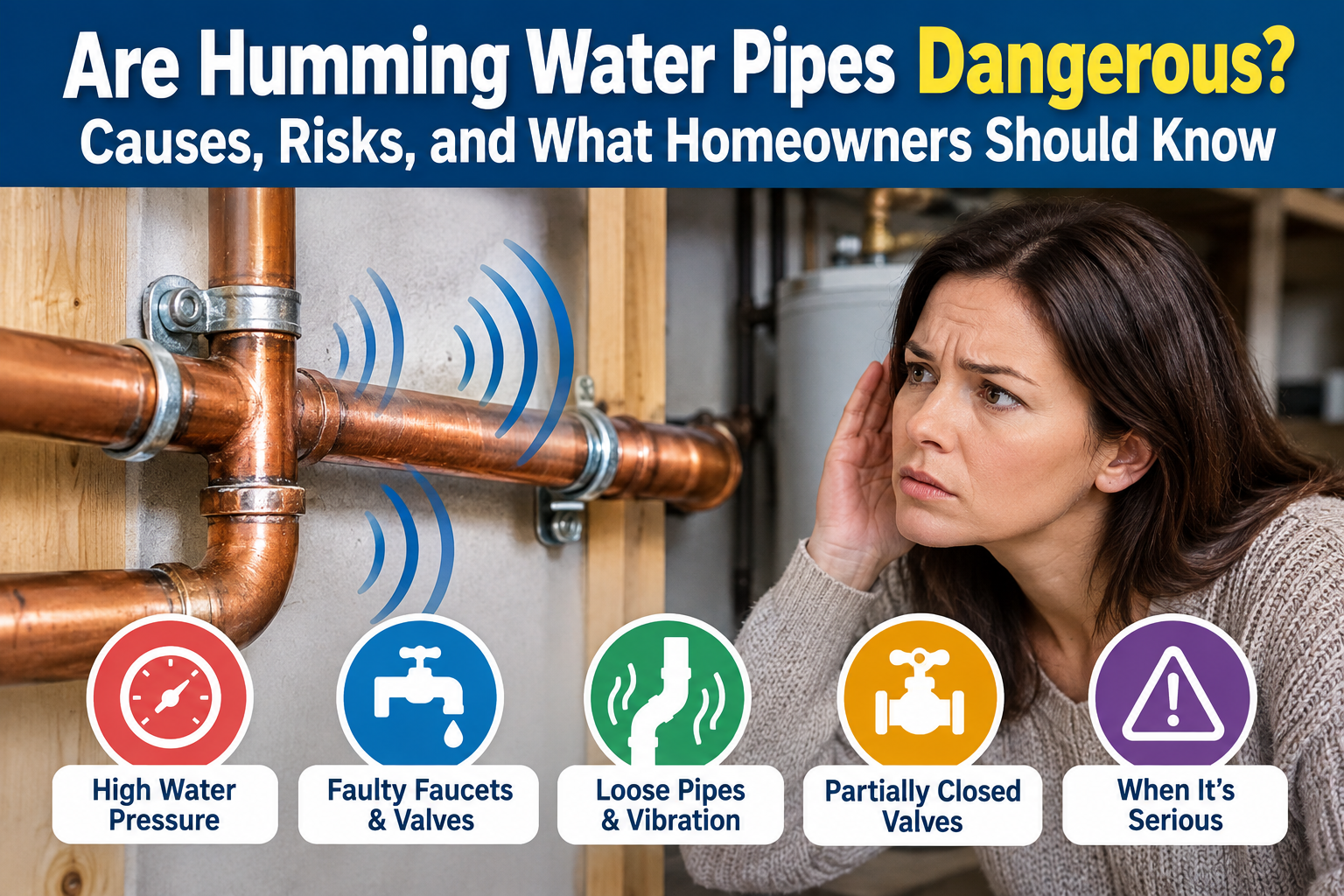
There are several reasons why pipes can produce a humming sound. One of the most common causes is high water pressure. When water moves through pipes at excessive pressure, valves and fixtures can vibrate and create a low humming noise. The vibration may travel through the plumbing network, making it difficult to identify exactly where the sound originates. Another common cause is a partially closed shutoff valve. When water is forced through a restricted opening, it can create turbulence and vibration. Older plumbing fixtures can also contribute to the problem because internal washers, cartridges, and seals may become worn over time. In some homes, pipes are not adequately secured, allowing them to move slightly whenever water flows through the system. This movement can amplify a normal plumbing sound into a noticeable hum.
High Water Pressure and Plumbing Risks
High water pressure is one of the most important issues to consider when investigating humming pipes. Water pressure that is higher than the plumbing system is designed to handle can place additional stress on faucets, valves, appliances, connections, and pipes. Over time, this pressure can contribute to leaks and premature wear. It does not necessarily mean that a pipe will suddenly burst, but consistently excessive pressure can increase the likelihood of plumbing problems. A humming sound that becomes louder when several fixtures are operating may be worth investigating. Homeowners should avoid randomly adjusting pressure-control equipment without understanding how the system works. If pressure appears unusually high or changes suddenly, a qualified plumber can check the system and determine whether a pressure-regulating device or another component needs attention.
Could a Faulty Faucet Cause the Humming?
Yes, a faulty faucet or fixture can sometimes make the entire plumbing system appear to be humming. A worn washer, damaged cartridge, or defective valve can vibrate rapidly as water passes through it. Because plumbing pipes are connected throughout the home, the vibration may travel some distance from the original source. This can make the noise seem as though it is coming from inside a wall or ceiling when the actual problem is located at a nearby faucet or toilet supply line. One useful observation is whether the humming changes when individual fixtures are turned on or off. If the sound stops when a particular fixture is closed, that fixture may be responsible. Replacing a worn internal component can sometimes solve the problem without requiring major plumbing work.
Partially Closed Valves and Restricted Water Flow
A partially closed valve can create conditions that produce humming or whistling sounds. Valves are designed to control water flow, but when they are positioned incorrectly or become damaged internally, they may cause turbulence. The faster-moving water can create vibrations that are transferred to connected pipes. Check valves, shutoff valves, toilet supply valves, and other plumbing controls can all potentially contribute to unusual sounds. A valve that has been partially closed accidentally may be easy to correct, but an old valve that is damaged or stuck may need replacement. Homeowners should be careful when operating older shutoff valves because forcing a corroded valve can sometimes cause additional problems.
Loose Pipes Can Increase Noise and Vibration
Another possible explanation is loose pipework. Pipes are normally supported with brackets, clips, or other methods that keep them stable. If a support becomes loose, the pipe can move when water flows through it. Even a small movement can create a humming, buzzing, knocking, or rattling sound. The problem may become particularly noticeable when a faucet is opened or closed quickly. Loose pipes are not necessarily dangerous by themselves, but excessive movement can place stress on joints and connections. If the pipe is accessible, a professional can determine whether additional support is needed. Pipes located inside walls or ceilings should not be disturbed unnecessarily because accessing them may require opening finished surfaces.
When Humming Pipes May Indicate a Serious Problem
Although humming is often a minor plumbing symptom, there are situations where it should receive prompt attention. Persistent and increasingly loud humming can indicate that a plumbing component is under unusual stress. The concern becomes greater when the noise is accompanied by visible leaks, wet walls, water stains, reduced water flow, sudden pressure changes, or repeated pipe movement. A sudden change in plumbing noise can also be important if the home’s plumbing system has recently been modified. In these circumstances, investigating the cause early may prevent a small defect from developing into a larger repair. If water is actively leaking near electrical equipment, homeowners should treat the situation as urgent and avoid contact with electrical components until the area has been made safe.
Can Humming Pipes Lead to Water Damage?
The humming sound itself generally does not cause water damage, but the underlying plumbing problem might. For example, excessive pressure can place additional stress on connections and fixtures, while loose pipes can move against surrounding structures. A deteriorating valve or fitting may eventually develop a leak. Water damage can be particularly troublesome when leaks occur behind walls, beneath floors, or above ceilings because they may remain unnoticed for some time. Signs such as damp patches, peeling paint, musty odors, warped materials, or unexplained increases in water usage can indicate a hidden leak. Finding and correcting the source early is usually easier than dealing with extensive moisture damage later.
How to Troubleshoot a Humming Plumbing System
A simple inspection can provide useful clues. First, pay attention to when the humming occurs. Does it happen continuously, only when water is running, or immediately after a faucet is turned off? Next, operate different fixtures individually and listen for changes in the sound. Check accessible areas for obvious leaks and look at visible pipes for unusual movement. If your home has a water-pressure gauge, you can also observe whether the pressure appears unusually high or fluctuates significantly. Do not dismantle valves or plumbing connections simply to locate a noise, especially if you are unfamiliar with the system. A qualified plumber can use systematic testing to identify whether the source is a fixture, valve, pressure issue, or pipe-support problem.
Ways to Reduce Humming Water Pipes
The appropriate solution depends on the cause. A worn faucet cartridge or washer may need replacement, while a damaged valve may require repair or replacement. If high pressure is responsible, the plumbing system may need to be evaluated and adjusted appropriately. Loose pipes may require better supports to reduce movement and vibration. In some cases, reducing unnecessary flow restrictions can also help. Regular plumbing maintenance is useful because worn valves, aging fixtures, and deteriorating connections can be identified before they become major problems. Avoid attempting complicated repairs without the necessary knowledge, particularly when working with concealed pipes, water heaters, or pressure-control equipment.
When Should You Call a Plumber?
You should consider contacting a professional when the humming is persistent, unusually loud, or accompanied by other plumbing symptoms. Professional assistance is especially appropriate if you notice water leaks, damaged walls, strong pipe vibration, unusual pressure, repeated valve problems, or unexplained changes in water usage. A plumber can inspect the system and determine whether the sound comes from a fixture, valve, pipe support, pressure problem, or another source. Calling early can be beneficial because identifying a minor issue is generally easier than repairing extensive water damage. If a pipe suddenly bursts or a major leak develops, shut off the appropriate water supply if it is safe to do so and seek professional assistance promptly.
5 FAQs About Humming Water Pipes
1. Are humming water pipes dangerous?
Usually, humming pipes are not immediately dangerous, but persistent humming can indicate a plumbing problem such as high water pressure, a faulty valve, or loose pipework. The underlying cause determines whether the situation requires repair.
2. Why do my water pipes hum when the faucet is turned on?
The sound may be caused by water moving through a restricted valve or fixture. A worn faucet cartridge, washer, or partially closed valve can create vibration that travels through the plumbing system.
3. Can high water pressure cause humming pipes?
Yes. Excessive water pressure can cause valves and fixtures to vibrate, producing humming or buzzing sounds. High pressure can also place additional stress on plumbing components over time.
4. Should I ignore a humming pipe if there is no leak?
It is better to investigate a new or persistent humming sound even when there is no visible leak. The issue may be minor, but identifying the cause early can help prevent future plumbing problems.
5. When should I call a professional plumber?
Contact a plumber if the humming becomes loud or continuous, or if it occurs with leaks, strong vibration, unusual water pressure, reduced flow, damp areas, or other unexplained plumbing changes.
Conclusion
So, are humming water pipes dangerous? In most cases, the humming itself is not dangerous, but it can be a useful warning sign that something within the plumbing system deserves attention. Common causes include high water pressure, partially closed valves, faulty faucets, loose pipes, and restricted water flow. Some causes are relatively simple to correct, while others can create greater problems if they are ignored. Paying attention to changes in plumbing sounds and checking for accompanying symptoms can help homeowners recognize potential issues early. If the noise is persistent, becoming louder, or accompanied by leaks and unusual pressure, professional inspection is a sensible step. Understanding the cause of the humming is ultimately more important than the sound itself, because proper diagnosis helps protect the plumbing system and the home from avoidable damage.