







Introduction to Kickstarter
Kickstarter is one of the best-known crowdfunding platforms in the world, created to help people turn creative ideas into real projects through financial support from the public. Instead of depending entirely on traditional investors, bank loans, or large companies, creators can present an idea directly to potential supporters and ask them to contribute money toward bringing that idea to life. Since its launch, Kickstarter has become associated with independent creativity, entrepreneurship, technology, games, art, film, music, publishing, design, and many other forms of creative work. The basic concept is straightforward: a creator develops an idea, establishes a funding goal and deadline, explains the project to an audience, and invites people to become backers. In return, backers may receive rewards connected to the project, depending on what the creator offers. This model has made crowdfunding an important option for people who have promising ideas but may not have enough personal funds or access to conventional financing.
What Is Kickstarter?
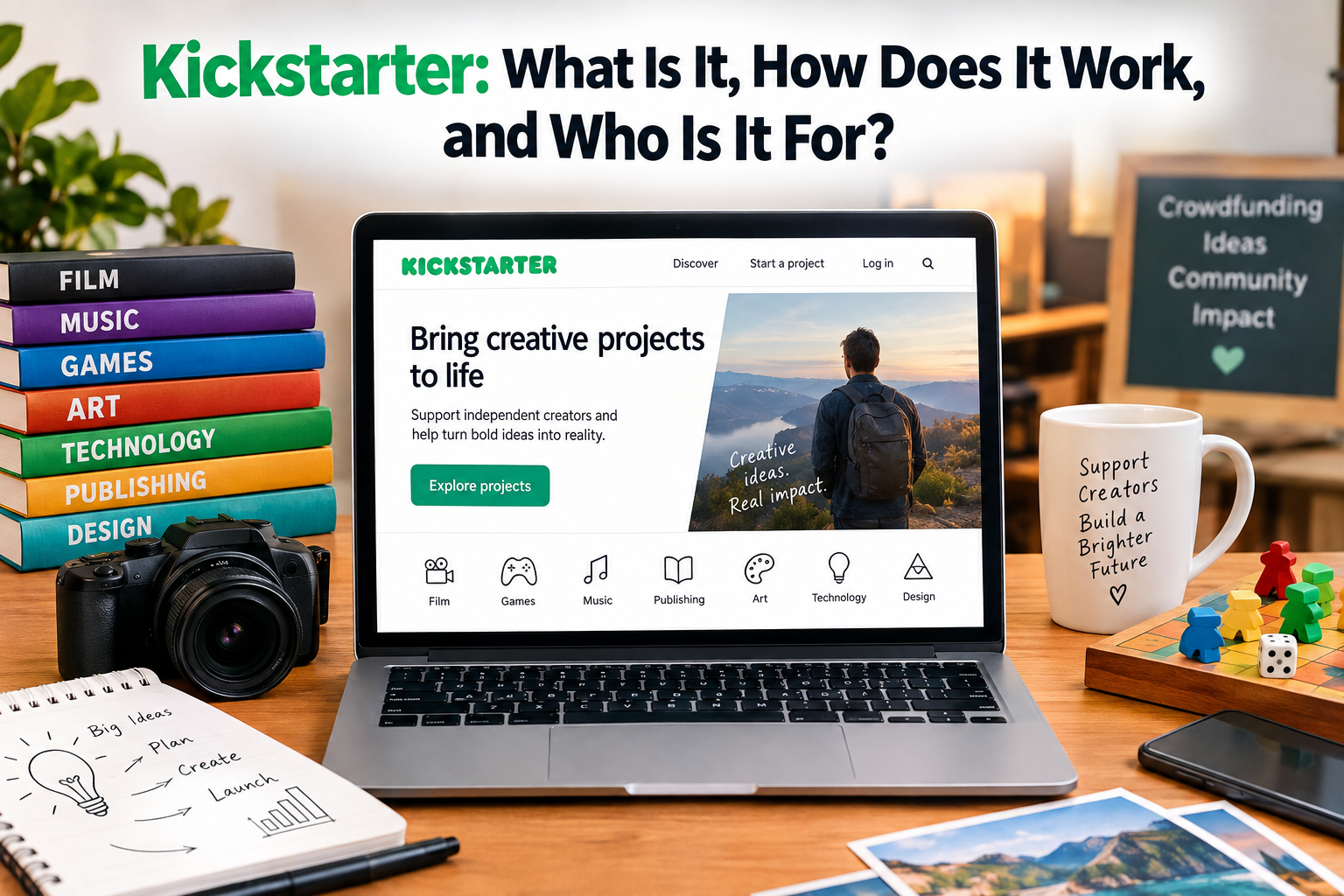
Kickstarter is a crowdfunding website designed primarily for creative projects. The platform allows creators to introduce projects to the public and seek financial support from people who are interested in seeing those projects completed. Rather than functioning like a conventional online store, Kickstarter is built around the idea of supporting a project before its final product is available. A creator might use the platform to develop a board game, publish a book, produce a film, create a piece of technology, manufacture a design product, or complete another creative project.
One of the important characteristics of Kickstarter is that a campaign normally has a specific funding goal and a defined amount of time in which to reach that goal. The creator explains what the project is, why it matters, how the money will be used, and what backers can expect. People who find the idea appealing can contribute different amounts. Depending on the campaign, those contributions may come with rewards such as an early version of the product, a special edition, merchandise, credits, or other benefits.
How Does Kickstarter Work?
The Kickstarter process begins when a creator develops a project and prepares a campaign. The creator needs to explain the idea clearly because potential backers generally want to understand what they are supporting before contributing money. A campaign can include written information, photographs, videos, illustrations, product demonstrations, schedules, budgets, and reward levels. The creator also selects a funding goal and campaign duration.
Once the campaign goes live, interested people can discover it and decide whether they want to become backers. If enough people support the project and the campaign reaches its required goal within the specified period, the creator receives the pledged funding according to Kickstarter’s applicable process and fees. If the campaign does not reach its goal under the platform’s all-or-nothing model, the project generally does not receive the pledged funds.
This structure creates an important difference between Kickstarter and an ordinary shopping website. A person supporting a campaign is not simply buying an already-produced product from a conventional retailer. Instead, the person is helping a creator attempt to develop and deliver something that may still be in production. That means backers accept a degree of risk, particularly when a project involves manufacturing, shipping, technical development, or other complicated processes.
Who Uses Kickstarter?
Kickstarter can be used by a wide variety of creators, although the platform is particularly associated with creative projects. Independent entrepreneurs may use it to test whether customers are interested in a new product before investing heavily in manufacturing. Artists can use campaigns to finance creative work, while filmmakers may seek funding for independent productions. Authors and publishers can use Kickstarter to finance books, special editions, comics, and other publishing projects.
The platform has also become popular in the gaming industry. Board games, tabletop games, card games, role-playing products, and related creative projects have attracted significant attention from crowdfunding communities. Technology and design projects can also use crowdfunding to demonstrate demand and raise money for development.
For creators, Kickstarter can serve more than one purpose. It can provide funding, but it can also help establish an audience. A successful campaign can demonstrate that people are interested in a particular idea, giving the creator valuable feedback and an initial community of supporters.
Why Do Creators Choose Kickstarter?
One major reason creators choose Kickstarter is that traditional funding can be difficult to obtain. A new entrepreneur may have an excellent concept but lack the financial resources needed to produce it. A bank may not want to provide a loan for an untested idea, while professional investors may prefer businesses with established revenue or significant growth potential.
Crowdfunding offers another approach. Instead of convincing one institution or a small group of investors, a creator can present the project to a much larger audience. If enough people believe in the idea, their individual contributions can collectively provide meaningful financial support.
Kickstarter can also provide an opportunity to test market demand. If thousands of people are willing to support an idea before production, that response can give a creator useful evidence that an audience exists. However, creators should not automatically assume that campaign success guarantees long-term commercial success. Delivering a project successfully requires careful planning, budgeting, communication, and execution.
What Are Kickstarter Rewards?
Many Kickstarter campaigns offer different reward tiers based on the amount a person pledges. A smaller contribution might provide a digital reward, acknowledgment, or another simple benefit, while a larger contribution could include the finished product or a premium version.
For example, a game campaign might offer a basic edition at one level and a deluxe edition containing additional components at a higher level. A book project could offer a digital copy at one level and a signed physical edition at another.
Rewards are intended to give supporters an additional reason to participate, but they also create responsibilities for creators. Once a campaign succeeds, the creator must produce the promised rewards and arrange delivery. Manufacturing problems, unexpected expenses, supply shortages, design changes, or shipping difficulties can sometimes cause delays.
What Should Backers Know Before Supporting a Project?
People considering a Kickstarter campaign should understand that crowdfunding is not exactly the same as traditional shopping. A product shown in a campaign may still be under development, and the final result may differ from early prototypes or promotional materials.
Before pledging, backers should examine the campaign description carefully. They can look at the creator’s background, project progress, estimated delivery schedule, funding plan, reward details, and updates. It is also useful to consider whether the creator appears realistic about potential challenges.
A polished video or attractive product design does not automatically mean that a project will be delivered successfully. Backers should understand the difference between supporting an idea and purchasing a completed product. The most responsible approach is to contribute only an amount they are comfortable risking if circumstances change.
How Can a Kickstarter Campaign Become Successful?
Successful campaigns often combine a strong concept with effective communication. The project needs to be understandable within a short amount of time. Potential supporters should quickly know what the creator is making, why it is valuable, and what makes it different.
A compelling campaign presentation can make a major difference. High-quality photographs, demonstrations, prototypes, illustrations, and videos can help supporters visualize the final product. At the same time, creators should provide realistic information rather than making promises that are difficult to fulfill.
Promotion outside the platform can also be important. Creators may build an audience through social media, email communities, industry contacts, events, or existing customers before launching their campaign. A campaign that begins with an interested audience has a stronger foundation than one that relies entirely on strangers discovering it after launch.
Another important factor is communication. Regular updates can help maintain interest and reassure backers that the creator is actively working on the project. When problems arise, honest and timely communication can be particularly important.
Advantages and Disadvantages of Kickstarter
There are several potential advantages to using Kickstarter. Creators can raise funds without relying exclusively on traditional financing. They can build an early community around their work, receive feedback, measure interest, and potentially introduce a product to an audience before conventional production.
However, crowdfunding also has disadvantages. Running a campaign requires significant preparation and promotion. A creator may spend considerable time producing campaign materials, communicating with supporters, managing rewards, and handling post-campaign responsibilities.
There is also the possibility of production delays and unexpected expenses. A project that looks simple at the concept stage can become considerably more complicated during manufacturing or development. Shipping and fulfillment can also present challenges, especially for physical products being delivered internationally.
For this reason, Kickstarter should not be viewed as an effortless way to obtain money. It is better understood as a combination of fundraising, community building, marketing, and project management.
Is Kickstarter Good for Entrepreneurs?
Kickstarter can be particularly useful for entrepreneurs who have a creative or product-based idea and want to determine whether there is genuine public interest. A successful campaign can provide both funding and an initial customer community. It can also help entrepreneurs learn about pricing, product preferences, messaging, and demand.
However, entrepreneurs should develop a detailed plan before launching. They should estimate production costs, packaging, fulfillment, taxes where applicable, marketing expenses, and possible unexpected costs. Setting a funding goal too low can create serious problems if the creator raises enough money to fulfill the campaign but not enough to cover the real cost of production.
The strongest campaigns therefore combine creative vision with realistic business planning. A great idea can attract attention, but careful execution is what ultimately determines whether the creator can deliver the promised project.
Frequently Asked Questions About Kickstarter
1. What is Kickstarter mainly used for?
Kickstarter is mainly used to fund creative projects such as games, technology, films, music, books, art, design products, and other original projects. Creators present their ideas to the public and seek financial support from backers.
2. Do Kickstarter backers buy a guaranteed product?
Not necessarily. A Kickstarter pledge supports a project that may still be under development. Creators generally aim to provide the promised rewards, but projects can face delays, changes, or other challenges. Backers should understand the risks before contributing.
3. How does Kickstarter make money?
Kickstarter can receive fees associated with successfully funded projects. The exact fee structure can depend on the circumstances and applicable platform policies, so creators should review the current terms before launching a campaign.
4. Can anyone create a Kickstarter campaign?
Eligibility depends on Kickstarter’s requirements, applicable rules, and the creator’s location and circumstances. A person interested in launching a project should review the platform’s current requirements and make sure the project fits its categories and guidelines.
5. Why do people support Kickstarter projects?
People support Kickstarter projects for many reasons. They may like the creator’s idea, want an early version of a product, appreciate an innovative concept, enjoy being part of a creative community, or simply want to help an independent project become reality.
Conclusion
Kickstarter has changed the way many creators approach funding by connecting ideas directly with audiences. Instead of waiting for traditional investors or established companies to approve a project, creators can present their concepts to potential supporters and allow public interest to help determine whether the project moves forward. This approach has opened opportunities for independent artists, entrepreneurs, designers, filmmakers, writers, game developers, and many other creators.
At the same time, Kickstarter is not a guaranteed shortcut to success. Creators need realistic budgets, strong communication, effective promotion, and a practical plan for delivering rewards. Backers also need to understand that supporting a campaign can involve risk because many projects are still being developed when funding takes place.
Ultimately, the strength of Kickstarter comes from its ability to bring creators and communities together. When a well-planned idea connects with an interested audience, crowdfunding can transform an early concept into a finished project while giving supporters the opportunity to participate in its journey.