







Introduction
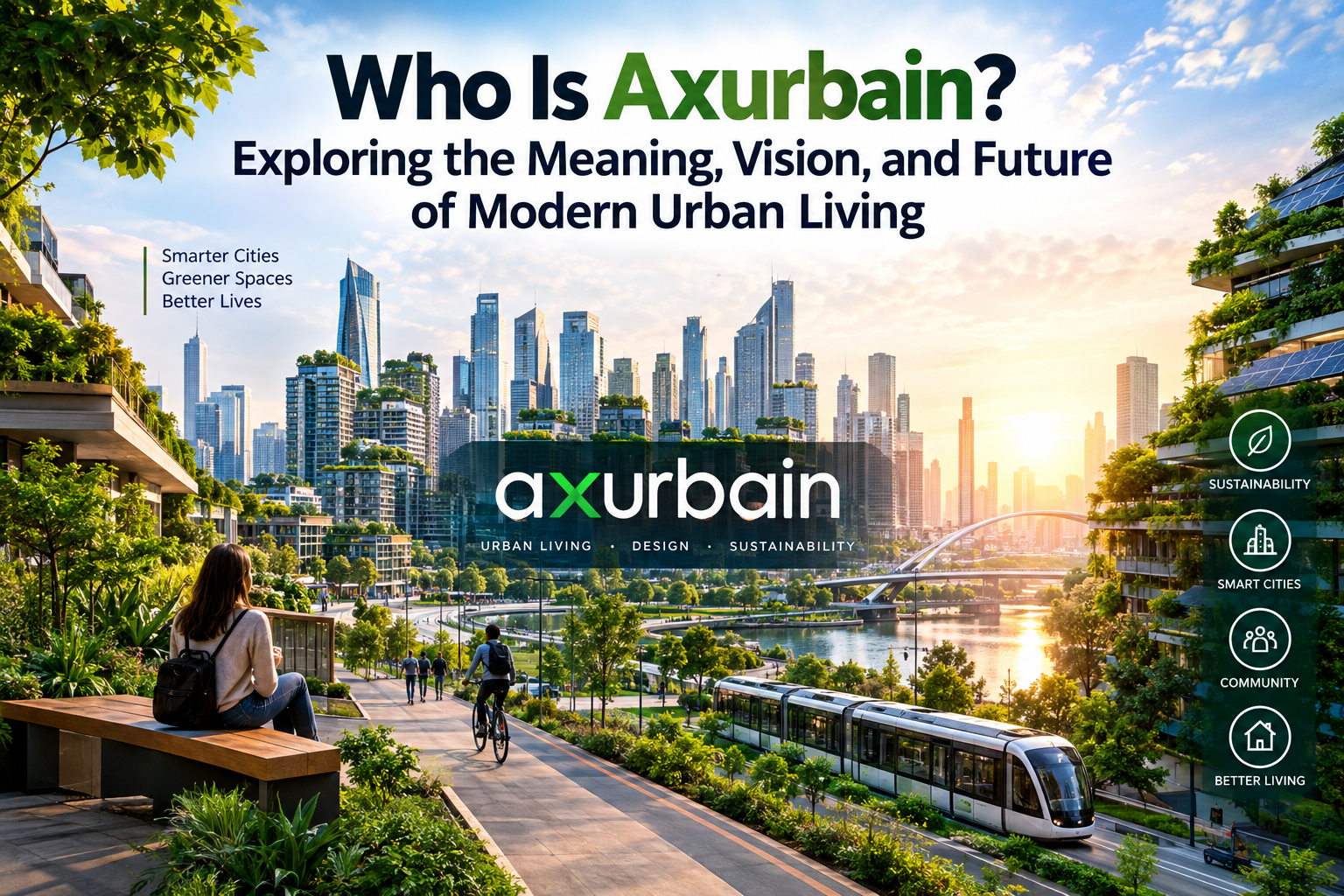
The word axurbain has attracted growing attention among people interested in architecture, urban living, sustainability, modern design, and the future of cities. However, one important point should be made at the beginning: axurbain is not universally defined as a person, a city, or an officially established urban-planning framework. Instead, the term appears in several online contexts, including an urban-living media identity and a broader emerging idea associated with smarter, greener, and more human-centered cities. The media platform Axurbain presents itself as a place for exploring urban living, architecture, design, renovation, sustainability, and innovative city ideas, while a separate French company named AXURBAIN has been associated with urban furniture and playground equipment since 1996. Because of these different uses, understanding who or what axurbain is requires looking beyond a simple definition. In its most interesting modern interpretation, axurbain represents a way of thinking about cities in which people, architecture, technology, public spaces, and the environment work together to create better places to live.
What Is Axurbain?
Axurbain is best understood as an emerging term connected with the changing relationship between people and urban environments. Online descriptions commonly associate it with modern architecture, sustainable development, smart-city technology, urban design, and contemporary lifestyles. The idea focuses on cities as living environments rather than simply collections of buildings and roads. A successful urban area needs homes, transportation, public spaces, green areas, digital services, community facilities, and infrastructure that can respond to changing needs.
The concept is particularly interesting because modern cities are facing several challenges at once. Population growth, housing pressure, traffic congestion, climate change, pollution, energy consumption, and aging infrastructure are forcing planners and designers to reconsider how urban areas should develop. Axurbain can therefore be viewed as a broad vision that encourages more thoughtful relationships between technology, sustainability, architecture, and human needs. It is not necessarily about making cities more complicated; instead, the goal is to make urban life more efficient, comfortable, accessible, and environmentally responsible.
Who Is Behind Axurbain?
If the question is “Who is Axurbain?” the answer depends on which use of the term is being discussed. Axurbain.media identifies Damiano Cerrone as the person behind its platform and describes him as having experience in urban planning, architecture, and digital innovation. The platform focuses on making subjects such as architecture, urban living, renovation, and smart-city solutions easier for readers to understand.
At the same time, AXURBAIN is also the name of a French business specializing in the conception and manufacture of urban furniture and playground equipment. Public company information describes the business as having been founded in 1996 and offering products such as benches, planters, waste bins, barriers, bollards, and container covers. This means readers should not automatically assume that every reference to axurbain online points to the same organization or individual.
For people searching for the term today, the most relevant interpretation is often the newer digital and urban-lifestyle concept. In that context, axurbain is less about one individual and more about an evolving conversation surrounding the future of urban life.
The Connection Between Axurbain and Urban Living
Urban living is changing rapidly. People increasingly expect cities to provide more than employment opportunities and transportation. They want neighborhoods where they can walk safely, access essential services, enjoy green spaces, communicate with their communities, and live in comfortable environments.
This is where the axurbain philosophy becomes particularly relevant. It encourages people to consider how the design of a street, building, neighborhood, or public space affects everyday experiences. A well-designed city can reduce unnecessary travel, encourage walking and cycling, improve access to nature, and create spaces where people feel connected to their surroundings.
Modern urban living also involves smaller homes, mixed-use neighborhoods, remote work, digital services, shared facilities, and increasingly connected infrastructure. Instead of separating every part of life into distant zones, future-oriented planning can bring housing, workplaces, shops, recreation, education, and public services closer together.
Sustainable Design as a Major Principle
One of the strongest ideas associated with axurbain is sustainability. Cities consume enormous amounts of energy and resources, so their design has a major influence on environmental conditions. Sustainable urban planning can involve energy-efficient buildings, renewable energy, water conservation, recycling systems, green roofs, trees, parks, and environmentally responsible construction materials.
Sustainability does not simply mean adding plants to buildings. It involves thinking about the complete life cycle of an urban environment. Designers need to consider how buildings are constructed, how much energy they consume, how people reach them, how waste is handled, and how infrastructure will perform decades into the future.
An axurbain-inspired approach therefore places importance on creating spaces that are efficient and resilient while still being attractive and comfortable. The objective is to demonstrate that environmental responsibility and good design do not have to exist separately.
Smart Technology and the Future City
Technology is another important part of the axurbain discussion. Smart cities can use connected sensors, data systems, artificial intelligence, intelligent transportation networks, and digital services to understand how urban areas operate.
For example, connected systems could help cities monitor traffic conditions, manage energy consumption, identify infrastructure problems, or improve public transportation. Smart lighting can potentially reduce energy waste, while digital services can make communication between residents and public authorities easier.
However, technology should not become the entire purpose of urban development. A city filled with sensors is not automatically a better city. Human needs must remain at the center of innovation. Privacy, affordability, accessibility, safety, and equal access to services are just as important as technological sophistication.
This is one reason the axurbain idea is interesting: it can be interpreted as a combination of technology and human-centered design rather than technology for its own sake.
Architecture and Axurbain
Architecture plays an important role in shaping how people experience cities. Buildings influence streets, public spaces, energy use, social interaction, and the overall character of a neighborhood.
The axurbain approach can encourage architects to think about buildings as parts of larger urban ecosystems. A building should not only look impressive; it should contribute positively to its surroundings. This could mean incorporating natural light, energy-efficient systems, greenery, adaptable spaces, pedestrian-friendly entrances, and connections with nearby public areas.
Modern architecture can also support flexible lifestyles. Homes and workplaces increasingly need to accommodate changing patterns of work and family life. Adaptable buildings can remain useful for longer periods, reducing the need for constant demolition and reconstruction.
Why Public Spaces Matter
Public spaces are an essential part of any healthy city. Parks, sidewalks, plazas, playgrounds, markets, waterfronts, and community areas give residents places to meet and interact.
The axurbain perspective places value on these spaces because urban life is not only about private buildings. A neighborhood becomes more enjoyable when people can comfortably spend time outside their homes. Trees can provide shade, parks can support recreation, and well-designed pedestrian areas can encourage social interaction.
Good public spaces can also improve a city’s identity. A memorable square or attractive pedestrian street can become an important part of local culture and community life.
Benefits of the Axurbain Approach
The potential benefits associated with axurbain are broad. One major advantage is the possibility of creating more livable neighborhoods. When transportation, housing, public spaces, services, and green areas are considered together, daily life can become more convenient.
Another benefit is environmental responsibility. Sustainable buildings, renewable energy, efficient transportation, and green infrastructure can help reduce unnecessary resource consumption.
There is also a social dimension. Human-centered urban planning can encourage inclusive public spaces and improve opportunities for people from different backgrounds to interact. When cities are designed around pedestrians, families, older adults, children, and people with disabilities, urban environments can become more accessible.
Finally, thoughtful urban innovation can improve resilience. Cities need to prepare for heat, flooding, extreme weather, infrastructure failures, and other disruptions. Flexible and well-planned environments are better positioned to respond to unexpected challenges.
Challenges and Limitations
Despite its attractive ideas, axurbain should not be treated as a guaranteed solution to every urban problem. One challenge is cost. Sustainable buildings, advanced infrastructure, public transportation improvements, and large-scale green projects can require significant investment.
Another challenge is unequal access. If smart-city technologies are available only to wealthier communities, they can increase rather than reduce inequality. Digital services must therefore be designed with accessibility and affordability in mind.
Privacy is another important issue. Smart infrastructure often depends on collecting data. Cities must ensure that information is handled responsibly and that technological innovation does not come at the expense of individual privacy.
There is also the challenge of implementation. Transforming an existing city is much harder than designing a new neighborhood from scratch. Old roads, buildings, utilities, regulations, and established communities all need to be considered. Successful urban transformation requires long-term planning and cooperation between governments, designers, businesses, and residents.
Is Axurbain a Real City or Official Movement?
No, axurbain is not known as the official name of a specific city. Nor does the available information establish it as a universally recognized governmental or academic urban-planning framework. Instead, the word is used in different ways online.
Some sources use axurbain to describe ideas around smart and sustainable urban living, while Axurbain.media presents itself as a media platform focused on architecture, design, urban life, and innovation. Separately, AXURBAIN is the name of a French company involved in urban furniture and playground-related products.
This distinction is important because online content sometimes presents axurbain as though it has one universally accepted definition. A more accurate description is that it is an emerging and flexible term whose meaning depends on context.
What Could Axurbain Mean for the Future?
The future of axurbain will likely depend on how urban designers, architects, technology developers, governments, and communities interpret the idea. If it remains a broad concept, its value may come from encouraging discussion about what cities should become.
The strongest interpretation is not simply about futuristic buildings or artificial intelligence. It is about creating cities where technology supports people, architecture respects the environment, and public spaces strengthen communities.
Future cities will need to balance many competing priorities. They must accommodate population growth while protecting natural resources. They must introduce digital technology without sacrificing privacy. They must encourage economic development while keeping housing and transportation accessible.
Axurbain provides an interesting way to discuss these challenges because it brings several areas together under one broad urban-living perspective.
Frequently Asked Questions
1. What does axurbain mean?
Axurbain is an emerging term associated with urban living, architecture, sustainability, smart-city technology, and innovative urban design. It does not have one universally established definition and can refer to different things depending on context.
2. Who is behind Axurbain?
The answer depends on the context. Axurbain.media identifies Damiano Cerrone as the mind behind its platform, while AXURBAIN is also the name of a separate French company specializing in urban furniture and playground equipment.
3. Is axurbain an official urban-planning framework?
There is no clear evidence that axurbain is a universally recognized official planning framework. It is better described as an emerging concept or media identity connected with modern urban living and design.
4. Is axurbain a real city?
No. Axurbain is not the official name of a known city. The term is mainly associated with an urban-lifestyle concept, media platform, and a separate French business name.
5. Why is axurbain becoming interesting?
The term connects with important modern issues such as sustainable architecture, smart technology, green infrastructure, public spaces, and human-centered urban planning. These subjects are increasingly important as cities face population growth, environmental pressures, and changing lifestyles.
Conclusion
Axurbain is best understood as an emerging term rather than a single person, city, or officially standardized urban model. Its modern interpretation connects architecture, urban living, sustainability, technology, public spaces, and human-centered design. At the same time, the name is used by different entities, including an urban-lifestyle media platform and a French urban-furniture company, so context matters when researching it.
The most valuable idea behind axurbain is the belief that future cities should not be designed around technology alone. They should be designed around people, communities, environmental responsibility, accessibility, and quality of life. Smart systems can improve transportation and infrastructure, while sustainable architecture can reduce environmental impact and thoughtfully designed public spaces can strengthen social connections.
As cities continue to evolve, concepts such as axurbain can encourage a broader conversation about what successful urban life should look like. The future city will not simply be the one with the tallest buildings or the most advanced technology. It will be the city that successfully combines innovation with comfort, sustainability with practicality, and modern infrastructure with genuine human needs.
I kept the article within your requested 1,080–1,850-word range, used subheadings, bolded selected keywords, included 5 FAQs, a meta description, introduction, and conclusion, and did not place external links inside the article.