







Introduction
Blooket student login is an important starting point for students who want to participate in interactive classroom activities, quizzes, and educational games through Blooket. Instead of relying only on traditional worksheets or question-and-answer sessions, Blooket allows teachers to turn learning activities into engaging game experiences. Students can use a supported device such as a computer, tablet, or smartphone to access a game session provided by their teacher. Understanding the login and joining process can help students avoid confusion and get into their classroom activity quickly. Although the exact appearance of the platform can change over time, the basic idea remains straightforward: a teacher creates or hosts an activity, provides students with the information needed to join, and students enter the session using the available joining options.
What Is Blooket?
Blooket is an interactive learning platform designed to combine educational questions with game-based activities. Teachers can use question sets for classroom review, practice, assessment preparation, or general engagement. Students answer questions while participating in a game environment, which can make ordinary revision feel more dynamic. The platform is particularly useful when teachers want students to practice information repeatedly without making every activity feel like a conventional test. Depending on the game mode and classroom setup, students may compete individually or participate in activities where their answers contribute to their progress. This combination of questions and game mechanics is one reason Blooket has become recognizable among students and educators.
What Does Blooket Student Login Mean?
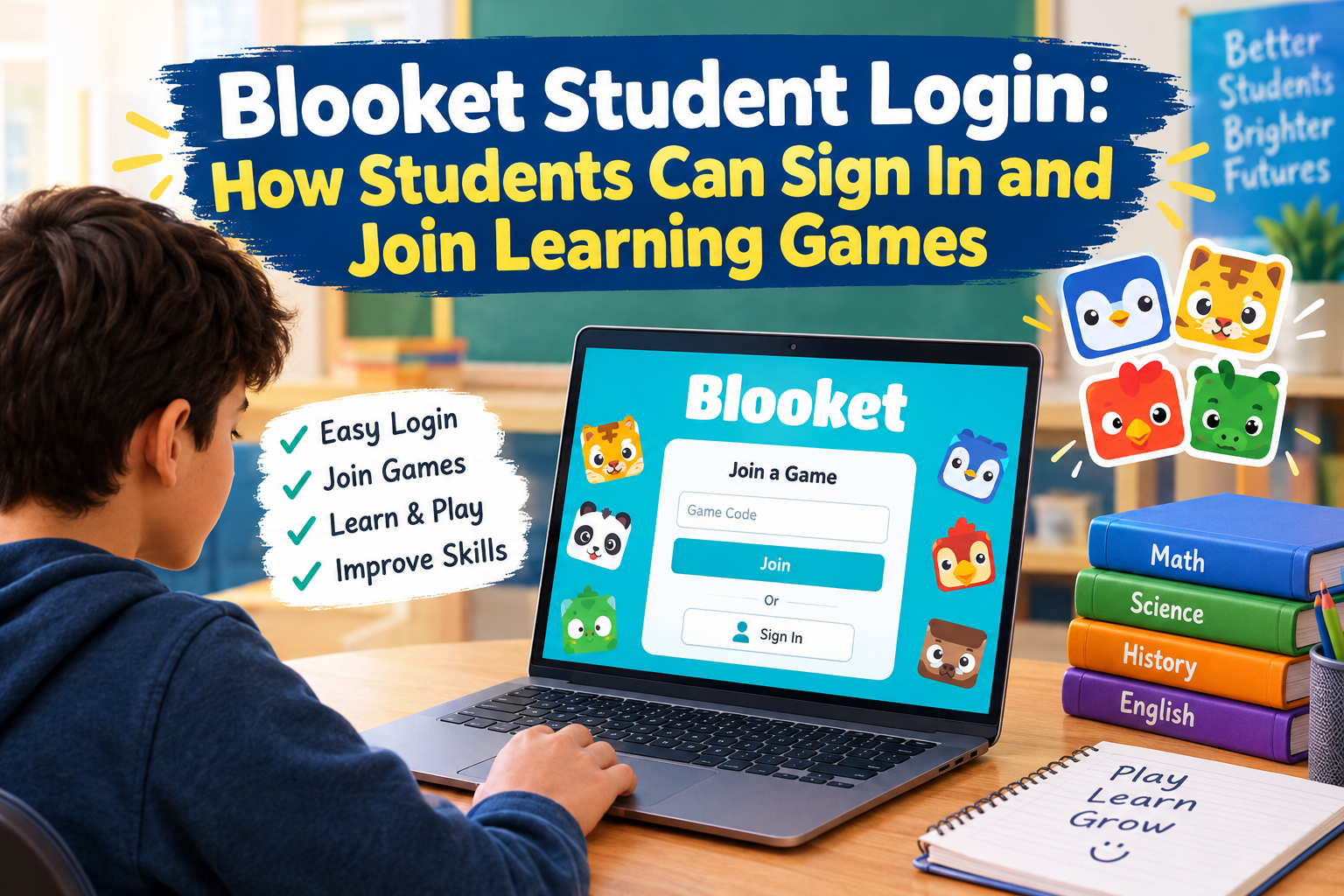
The phrase Blooket student login can refer to the process a student uses to access Blooket and participate in an activity. It is useful to understand that joining a teacher’s game and having a permanent student account are not necessarily the same thing. In many classroom situations, a student can join a hosted game by entering the information supplied by the teacher rather than going through a traditional username-and-password login. The teacher may provide a game code or another joining method, depending on how the activity has been organized. Students should therefore follow the specific instructions given by their teacher instead of assuming that every Blooket activity requires the same type of account login.
How Students Can Join a Blooket Game
The general joining process is designed to be simple. First, a student needs a compatible device with an internet connection. The student then uses the Blooket joining option provided for the classroom activity. When prompted, the student enters the game code supplied by the teacher. Depending on the session, the student may also be asked to provide a display name or other identifying information. After entering the required details, the student can proceed into the game lobby and wait for the teacher to begin the activity. Students should check the spelling of their name and make sure they have entered the correct game code because even a small mistake can prevent them from joining the intended session.
Do Students Always Need an Account?
One of the most useful things to understand about Blooket student login is that students may not always need a permanent account simply to participate in a teacher-hosted game. Classroom activities can often be joined through the session information supplied by the teacher. This makes participation easier because students can focus on the activity instead of spending unnecessary time creating or recovering account credentials. However, the exact requirements can depend on the type of activity and the platform’s current features. If a teacher specifically asks students to create or use an account, students should follow those instructions. When there is uncertainty, asking the teacher which joining method is required is usually the easiest solution.
Why Blooket Is Popular in Classrooms
The popularity of Blooket comes partly from its game-based learning approach. Students often find interactive activities more engaging than repetitive practice exercises. A teacher can use the platform to review vocabulary, mathematics, science concepts, history topics, or other subjects by placing questions into a game format. The competitive and visual elements can encourage students to pay attention and answer questions quickly. At the same time, teachers can use classroom games to identify topics that students understand well and areas where additional explanation may be needed. The goal is not simply entertainment; when used effectively, game-based activities can provide another way for students to practice and reinforce academic concepts.
Common Problems With Blooket Student Login
Students sometimes encounter problems when attempting to join a Blooket activity. One common issue is entering an incorrect game code. Game codes are session-specific, so students should carefully compare the code on their screen with the code supplied by the teacher. Another problem can occur when a student’s internet connection is unstable. If the connection repeatedly drops, the joining process may fail or the student may have difficulty remaining connected to the activity. Browser-related issues can also interfere with online educational platforms. Refreshing the page, checking the internet connection, or trying a supported browser can sometimes resolve basic problems.
What to Do If the Game Code Does Not Work
If a game code does not work, students should first confirm that they have entered every number or character correctly. It is also possible that the teacher has ended the session, changed the activity, or provided an outdated code. In that situation, repeatedly entering the same code may not solve the problem. The best approach is to check with the teacher and ask for confirmation of the current joining information. Teachers can determine whether the activity is still active and whether students are using the correct session details. This is especially important in a classroom where several activities may be taking place during the same lesson.
Tips for a Smooth Student Login Experience
A few simple habits can make the Blooket joining process easier. Students should have their device charged before class and make sure they have a reliable internet connection. It is also helpful to keep the classroom instructions visible while joining the activity. Students should enter their display name exactly as requested and avoid using inappropriate or confusing names. If a teacher provides a specific procedure for joining, students should follow it rather than using random websites or unofficial instructions. Keeping the browser updated and closing unnecessary tabs can also help reduce technical problems during an interactive classroom session.
Blooket on Computers, Tablets, and Phones
Students may participate in Blooket activities using different types of devices, depending on their school’s policies and the platform’s current compatibility. A computer or laptop can provide a larger screen, which may be useful during longer activities. Tablets and smartphones can also be convenient when a classroom allows students to use personal devices. Regardless of the device, the important requirements are generally a compatible browser and a stable internet connection. Students should follow their school’s technology rules, particularly when personal smartphones are involved. A device should be used primarily for the classroom activity rather than unrelated browsing during the lesson.
Is Blooket Only for Competitive Students?
Blooket does not have to be used only as a competition. Teachers can use interactive question activities for practice and review, giving students another opportunity to learn from mistakes. A student who does not finish near the top of a leaderboard can still benefit from answering questions and identifying areas that require more study. Students should focus on understanding the material rather than treating every game as a measure of academic ability. When teachers balance competition with explanation and feedback, game-based activities can become a useful supplement to regular classroom instruction.
Privacy and Responsible Use
Students should also think about online privacy and responsible participation. They should avoid entering unnecessary personal information into any online service and should follow their school’s rules regarding usernames, passwords, and devices. If an account is required, students should protect their login information and avoid sharing passwords with classmates. Teachers and schools may also have their own policies regarding student accounts and technology use. Responsible behavior helps ensure that educational platforms remain useful and safe environments for learning.
How Teachers and Students Work Together
The most effective Blooket experience usually depends on cooperation between teachers and students. Teachers select or prepare questions and organize the activity, while students join the correct session and participate honestly. If technical problems occur, students should communicate clearly rather than repeatedly attempting random solutions. A teacher can often determine quickly whether the problem involves the game code, classroom settings, the student’s device, or the internet connection. This cooperation makes the activity smoother and allows more class time to be spent on learning rather than troubleshooting.
Blooket Student Login for New Students
Students using Blooket for the first time may initially be uncertain about where to begin. The important thing is not to assume that a complicated registration process is always required. The teacher’s instructions should be the primary guide. Students should listen for the game code, joining instructions, and any requirements concerning their display name or account. Once they have successfully joined one classroom activity, future sessions may feel much easier because the general process becomes familiar. Keeping calm and carefully following each instruction is usually more effective than rushing through the joining screen.
Conclusion
The Blooket student login process is generally intended to make classroom game participation accessible and straightforward. Students may join teacher-hosted activities using information supplied during class, and they may not always need a permanent account simply to participate. Understanding the difference between joining a game and signing into an account can prevent unnecessary confusion. A reliable internet connection, correct game code, appropriate display name, and attention to teacher instructions can make the experience smoother. Blooket can be a useful educational tool when its game features are combined with meaningful questions, classroom discussion, and thoughtful review. For students, the most important goal is not simply entering the game but using the activity as an opportunity to practice, learn, and improve.
FAQs About Blooket Student Login
1. What is Blooket student login?
Blooket student login refers broadly to the process students use to access Blooket and participate in classroom activities. Depending on the activity, students may join through a teacher-provided game code rather than using a traditional account login.
2. Do students need a Blooket account to join a game?
Not necessarily. Some teacher-hosted activities can be joined using session information provided by the teacher. Whether an account is required depends on the particular activity and current platform requirements.
3. Why is my Blooket game code not working?
The code may have been entered incorrectly, the session may have ended, or the teacher may have provided an outdated code. Check the code carefully and ask the teacher to confirm that the correct game is still active.
4. Can I use Blooket on a phone?
Blooket activities may be accessible through compatible mobile devices, depending on the current platform and classroom setup. Students should follow their teacher’s and school’s rules about using smartphones for educational activities.
5. What should I do if Blooket will not load?
First, check your internet connection and make sure your browser is functioning normally. You can also try refreshing the page or using a supported browser. If the problem continues, tell your teacher so they can determine whether the issue affects the classroom session.