








Introduction
A fasting calculator is a simple planning tool designed to help people understand and organize their fasting and eating periods. Fasting has become increasingly popular among people who want to establish a structured eating schedule, practice intermittent fasting, or simply become more aware of when they eat during the day. Instead of manually counting hours between meals, a fasting calculator can make the process easier by determining when a fasting period begins and when it ends. Depending on the type of calculator, users may enter a starting time, fasting duration, eating window, or preferred fasting method to receive a personalized schedule. While the tool can be convenient, it is important to understand that a calculator is primarily a planning aid rather than a medical device. Individual nutritional needs can vary considerably based on age, lifestyle, activity level, medications, and overall health.
What Is a Fasting Calculator?
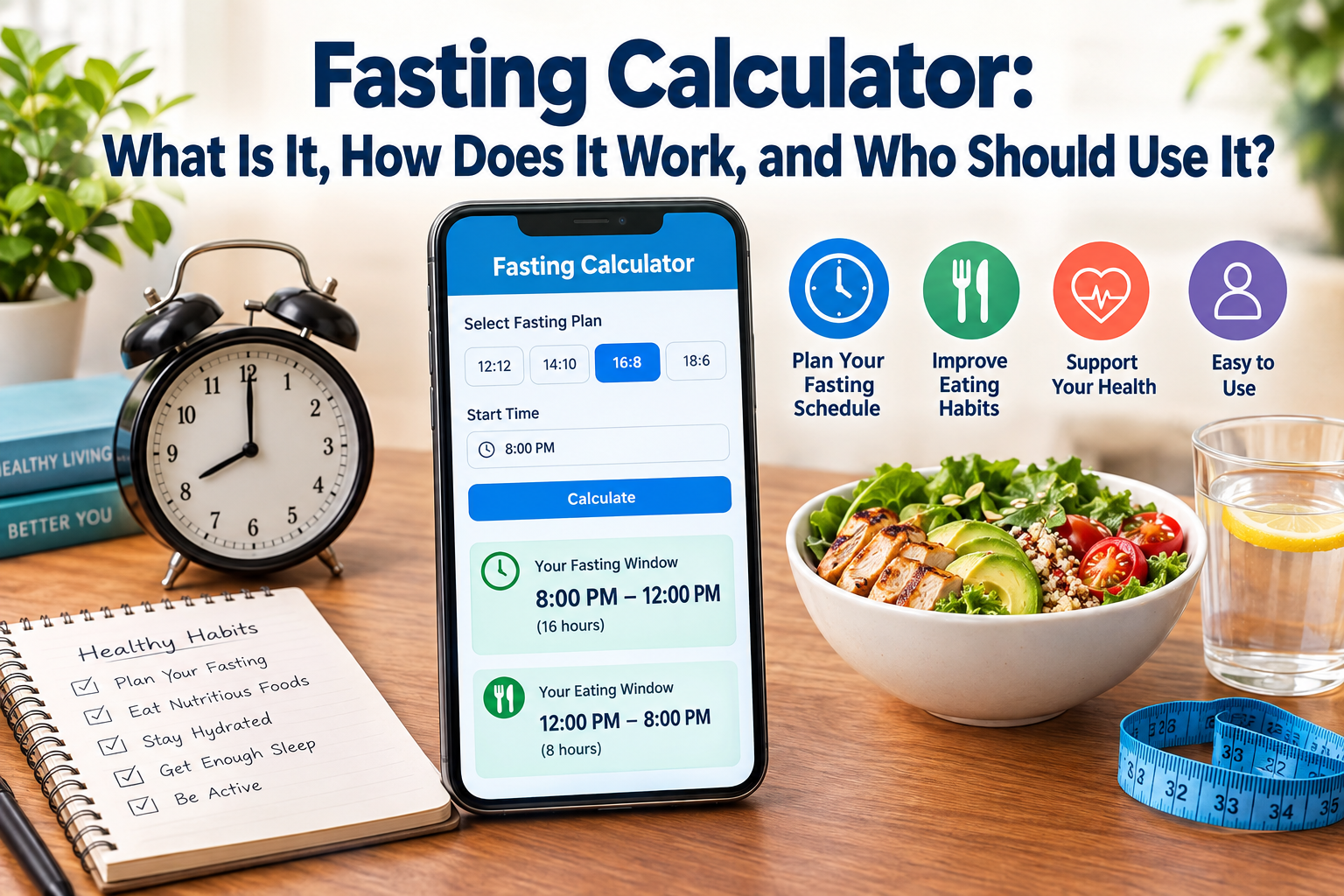
A fasting calculator is a digital or mathematical tool that calculates fasting and eating periods based on information entered by the user. For example, someone following a 16:8 intermittent fasting routine may choose to fast for 16 hours and eat during an 8-hour window. If the person finishes eating at 8:00 p.m., the calculator can determine that the next fasting period would generally end at noon the following day. This eliminates the need to repeatedly count hours on a clock. Some calculators are designed specifically for intermittent fasting, while others may be used for general fasting schedules. The basic principle is straightforward: the user provides a starting point and a desired fasting duration, and the calculator determines the corresponding end time. More advanced tools may also provide reminders, fasting logs, meal-window tracking, and different fasting patterns.
How Does a Fasting Calculator Work?
The basic calculation behind a fasting calculator is relatively simple. It adds the selected fasting duration to the time when the fasting period begins. If a person begins fasting at 7:00 p.m. and selects a 14-hour fasting period, the fasting window would end at approximately 9:00 a.m. the following day. Similarly, an 18-hour fasting period beginning at 6:00 p.m. would end at noon the next day. The calculator may also determine the beginning of the next eating window based on the selected schedule. Some tools allow users to select common patterns such as 12:12, 14:10, 16:8, or 18:6, where the first number represents fasting hours and the second represents eating hours. Although the arithmetic is easy, the main advantage of the calculator is convenience. It provides a clear schedule that users can follow without manually calculating every fasting and eating period.
Common Fasting Schedules
There are several fasting schedules that people commonly use, and a fasting calculator can help organize each one. A 12:12 schedule involves approximately 12 hours of fasting and 12 hours in which meals are consumed. This may be relatively simple for someone who wants to create more structure around eating. A 14:10 schedule provides 14 hours of fasting and a 10-hour eating period. Another commonly discussed approach is 16:8, involving 16 hours of fasting and an 8-hour eating window. Some people choose longer fasting periods, but longer does not automatically mean better. The appropriate schedule can differ from one person to another. A calculator can tell someone when a fasting period begins or ends, but it cannot determine whether a particular fasting duration is suitable for that individual.
Why Do People Use a Fasting Calculator?
One major reason people use a fasting calculator is convenience. When following a time-restricted eating schedule, remembering exactly when the fasting window ends can become difficult, especially when daily routines change. A calculator provides a quick reference point. It can also help people maintain consistency because the user can establish a repeatable schedule instead of choosing fasting times randomly each day. Another advantage is that it can make planning easier around work, school, exercise, social events, and sleep. For people who are new to fasting, seeing the exact beginning and ending times may make the concept easier to understand. However, users should remember that consistency should not come at the expense of adequate nutrition, hydration, sleep, or general well-being.
Fasting Calculator and Intermittent Fasting
The term intermittent fasting generally describes eating patterns that alternate between periods of eating and fasting. A fasting calculator can be particularly useful for this approach because intermittent fasting depends heavily on timing. For example, someone following a 16:8 routine may choose an eating window from 12:00 p.m. to 8:00 p.m. The calculator can then identify the fasting period from 8:00 p.m. until noon the next day. The exact schedule can be adjusted according to the person’s lifestyle. Some individuals prefer an earlier eating window, while others find a later window easier to maintain. The calculator does not decide which schedule is healthiest; it simply translates the selected schedule into specific times.
Fasting Calculator for Daily Planning
A fasting calculator can also function as a daily planning tool. Instead of thinking about fasting only in terms of avoiding food, users can use the calculated schedule to organize their entire day. For example, an individual may plan meals, work responsibilities, exercise, and bedtime around a chosen eating window. This can be useful for people whose schedules are predictable. However, real life is not always predictable. Travel, social occasions, unusual work hours, illness, or changes in sleep patterns can affect eating schedules. A flexible approach may therefore be more practical than treating a fasting schedule as an unbreakable rule.
Important Factors to Consider
Although a fasting calculator can provide precise times, there are several factors that should be considered before following any fasting routine. Hydration is important, and people should understand what beverages are appropriate for their chosen fasting approach. Nutritional quality during eating periods also matters. A fasting schedule does not automatically make an unhealthy diet healthy. Foods containing adequate protein, fiber, vitamins, minerals, and other essential nutrients remain important. Physical activity should also be considered because demanding exercise can affect energy requirements. Sleep is another important factor. Someone who regularly sacrifices sleep in order to follow a strict fasting schedule may need to reconsider the routine.
Who Should Be Careful With Fasting?
Fasting is not appropriate for everyone. People with certain medical conditions, those taking medications that affect blood sugar or blood pressure, pregnant or breastfeeding individuals, children and adolescents, and people with a history of disordered eating may need specific professional guidance before changing their eating patterns. Older adults or people with particular nutritional requirements may also need individualized advice. A fasting calculator cannot identify medical risks or determine whether fasting is appropriate for a specific person. If someone has a medical condition or takes regular medication, discussing dietary changes with a qualified healthcare professional is a sensible step before beginning a new fasting routine.
Benefits and Limitations of a Fasting Calculator
The main benefit of a fasting calculator is its ability to make time calculations simple. It can improve organization, reduce confusion, and help users maintain a consistent schedule. It may also help people compare different fasting patterns and understand how a selected duration affects their daily routine. However, the tool has clear limitations. It cannot evaluate a person’s nutritional status, diagnose health conditions, calculate individual calorie requirements with medical accuracy, or guarantee a particular health outcome. A calculator provides timing information, not personalized medical advice. Users should therefore treat the results as a planning guide rather than a complete health recommendation.
Tips for Using a Fasting Calculator Effectively
To use a fasting calculator effectively, begin with a realistic schedule that fits your normal routine. Enter the correct start time and choose a fasting period that you understand. Keep track of how the schedule affects your energy, concentration, sleep, exercise, and daily responsibilities. Avoid assuming that longer fasting automatically produces better results. It can also be helpful to focus on the quality of meals consumed during the eating window rather than simply watching the clock. If a particular schedule causes persistent weakness, dizziness, excessive hunger, or other concerning symptoms, it should not simply be ignored. A calculator can support organization, but your overall well-being should remain the priority.
Fasting Calculator vs. Manual Calculation
Before digital tools became common, people could easily calculate fasting periods using a clock or written schedule. Manual calculation is still possible, especially for simple routines. For example, adding 12 hours to a 7:00 p.m. starting time gives 7:00 a.m. the next day. However, digital calculators become more useful when schedules involve different fasting durations, changing start times, or multiple eating windows. They can also reduce mistakes caused by crossing midnight. The difference is mainly convenience rather than complexity. The underlying calculation remains simple, but a digital tool can make the process faster and easier to repeat.
Frequently Asked Questions
1. What is a fasting calculator used for?
A fasting calculator is mainly used to determine when a fasting period begins and ends. It can help users organize intermittent fasting or other time-based eating schedules without manually calculating the hours.
2. What is the 16:8 fasting method?
The 16:8 method generally means fasting for 16 hours and having an 8-hour eating window. A fasting calculator can determine the exact times for these periods based on the user’s selected starting point.
3. Can a fasting calculator tell me whether fasting is safe?
No. A calculator can determine timing, but it cannot assess your medical history, medications, nutritional requirements, or individual health risks. People with medical concerns should seek appropriate professional guidance.
4. Does a longer fasting period always provide better results?
Not necessarily. A longer fasting period is not automatically better for every individual. The suitability of a fasting schedule depends on personal circumstances, nutrition, lifestyle, and health considerations.
5. Can I change my fasting schedule?
Yes, fasting schedules can be adjusted according to personal routines and circumstances. However, major changes to eating patterns should be approached carefully, particularly if you have health conditions or specific nutritional needs.
Conclusion
A fasting calculator is a convenient tool for anyone who wants to understand and organize fasting and eating windows. By entering a starting time and fasting duration, users can quickly determine when their next eating period begins. This can make intermittent fasting and other time-based eating routines easier to plan and follow. Nevertheless, the calculator should be viewed as a scheduling aid rather than a source of medical advice. A healthy approach to fasting also requires attention to nutrition, hydration, sleep, physical activity, and individual health needs. The most useful fasting schedule is one that can be incorporated responsibly into a person’s lifestyle without compromising overall well-being.